
ELECTRICAL SAFETY & EQUIPMENT PROTECTION
Protecting More Than the Fridge: Whole-House Voltage Protection from the Consumer Unit
Many Kenyan homes protect the refrigerator using a plug-in fridge guard. But what about the television, washing machine, Wi-Fi router, CCTV system, microwave, gate motor, water pump and other electrical equipment connected throughout the property?
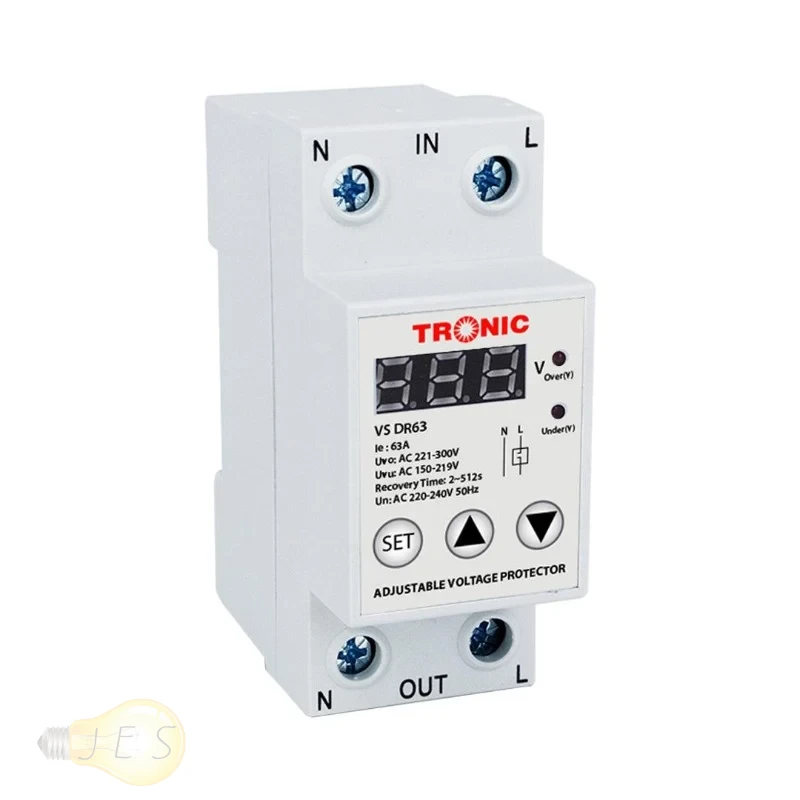
A properly selected DIN-rail adjustable voltage protector can be installed at the consumer unit or electrical distribution board to monitor the incoming power supply and protect multiple downstream circuits from sustained overvoltage and undervoltage.
Why Voltage Fluctuations Can Damage Electrical Equipment
Electrical and electronic equipment is designed to operate within a defined voltage range. When the incoming voltage remains too high or too low, equipment may overheat, operate inefficiently, shut down unexpectedly or suffer premature component failure.
Sensitive electronic equipment is particularly vulnerable because modern appliances contain control boards, power supplies, sensors and electronic components that may be damaged by abnormal supply conditions.
Equipment commonly exposed to voltage problems
- Refrigerators and freezers
- Televisions and home entertainment systems
- Washing machines and dishwashers
- Wi-Fi routers, CCTV systems and access-control equipment
- Microwaves and other electronic kitchen appliances
- Air-conditioning equipment
- Water pumps and automatic pump controllers
- Computers, printers and office equipment
- Gate motors and security systems
Moving Protection from the Socket to the Distribution Board
A standard plug-in fridge guard protects only the appliance connected through that particular socket. Every additional appliance requires a separate device, and permanently connected equipment may remain unprotected.
A distribution-board voltage protector takes a more centralised approach. Once correctly integrated into the consumer unit, it monitors the incoming voltage supplying the protected circuits.
When the supply moves outside the programmed safe operating limits, the device disconnects the affected installation. After the voltage stabilises, it restores the supply following the configured recovery delay.
Plug-In Fridge Guard
- Protects one connected appliance
- Installed at a socket outlet
- May require several units around the house
- Cannot normally protect permanently connected equipment
Distribution-Board Voltage Protector
- Can protect several downstream circuits
- Installed within the consumer unit or distribution board
- Protects socket-connected and selected fixed equipment
- Provides centralised voltage monitoring
How the Protection Works
Continuous Monitoring
The device continuously measures the incoming supply voltage.
Abnormal Voltage Detection
If the voltage rises above or falls below the configured limits, the condition is detected.
Automatic Disconnection
The supply to the protected circuits is disconnected before the abnormal condition continues damaging equipment.
Delayed Reconnection
Once the voltage returns to an acceptable range, the supply is restored after the programmed recovery period.
Why the Reconnection Delay Matters
Restoring power immediately after every interruption is not always desirable. Refrigerators, freezers, air conditioners and other compressor-based equipment may require time for internal pressures to equalise before restarting.
Where the selected voltage protector provides an adjustable recovery delay, the engineer can configure it according to the connected loads and the manufacturer’s operating requirements.
The settings should not be copied blindly from another property. A suitable configuration depends on the supply characteristics, equipment being protected and the operational needs of the building.
Engineering Considerations Before Installing One
Although these devices may appear simple, they form part of the main electrical distribution system. Correct product selection and protection coordination are therefore essential.
1. Confirm the Actual Load
The building’s maximum demand must be compared with the documented continuous-current rating of the device. A product marked “63A” should not automatically be assumed suitable for every 63A consumer unit.
2. Check the Manufacturer’s Data
The front label, technical datasheet, certification and supplier documentation should agree. The engineer should verify the stated voltage range, current rating, breaking method and operating duty.
3. Coordinate Existing Protection
The voltage protector must be coordinated with the main isolator, circuit breakers, RCCB or RCBO protection and the distribution-board arrangement.
4. Consider the Consequence of a Whole-Board Shutdown
If one device protects the entire property, an abnormal-voltage event may disconnect every downstream circuit. Some sites may benefit from separate protection zones for essential and non-essential equipment.
5. Allow for Larger or Three-Phase Installations
Commercial facilities, large houses and three-phase boards may require a dedicated voltage-monitoring relay operating appropriately rated contactors or circuit breakers rather than passing the full load through a small domestic device.
6. Test After Installation
The electrician should verify connections, protection coordination, operating settings, board labelling and safe automatic reconnection before handing the installation over.
Important: It Is Not a Replacement for Every Protective Device
A distribution-board voltage protector is one layer within a complete electrical protection system. It should not be treated as a replacement for:
- MCBs or MCCBs: protection against circuit overloads and short-circuit faults.
- RCCBs or RCBOs: additional protection against earth-leakage and electric-shock risks.
- Surge Protective Devices: protection against fast transient surges caused by lightning and switching events.
- Proper earthing and bonding: required for safe fault-current paths and effective operation of protective devices.
- Voltage stabilisers or UPS systems: where the equipment requires regulated voltage or uninterrupted power instead of disconnection.
In simple terms, an adjustable voltage protector responds to sustained abnormal supply voltage by disconnecting the load. An SPD performs a different function: it limits and diverts short-duration transient surge energy. In many installations, both forms of protection may be appropriate.
Applications Beyond Residential Houses
Distribution-board voltage monitoring is not limited to domestic refrigerators and televisions. A properly engineered arrangement can also support equipment protection in:
- Apartment buildings and staff housing
- Small offices and retail premises
- Hotels and serviced apartments
- Schools and institutional facilities
- CCTV and communications rooms
- Water-pumping installations
- Workshops and small commercial facilities
For facilities containing critical loads, the protection philosophy should consider business continuity. Automatically disconnecting an entire distribution board may protect equipment, but it could also interrupt alarms, ICT systems, refrigeration or security infrastructure. Dedicated circuits, UPS backup or controlled load separation may therefore be required.
Our Engineering Perspective
The best solution is not simply purchasing a voltage protector and fitting it into an available space. The correct approach begins with assessing the supply, measuring the connected load, reviewing the existing consumer unit and identifying which equipment requires protection.
Jumba Engineering can inspect the installation, select the appropriate protection arrangement, integrate it safely into the distribution board and test the completed system.
Technical References
The device shown is an example of an adjustable single-phase voltage protector. Final product selection should be based on the approved technical documentation, certification and installation requirements.